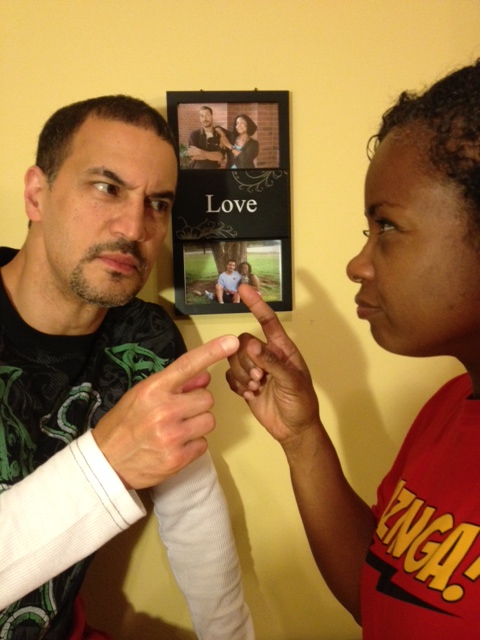
COUNTING THE COST

IMG_2193.JPG
I’d like to get into the second reason I believe that lead to divorce. I have termed this, “Not Counting the Cost.” Any big decision takes thought, consideration, counsel and prayer. This is true for choosing careers, planning a career change, moving or planning a trip. Think of the last vacation you planned. Didn’t you think about dates, coordinate potential dates with work obligations, and how you being out of town would affect those around you?

We spend so much time and effort planning a vacation and a career but our society as a whole spends less time considering the important decision of a marriage. A decision that makes two people united; two people “won”, a decision that has implications for the rest of our lives, a decision that affects all other decisions afterwards, is made with less thought and consideration than choosing what pair of shoes one should buy.

Don’t believe me? Ok, after I said “I do,” decisions of what I was doing after work, on the weekends, or where we should move were made not by me alone but by discussion of two who became “won.” Why? My spouse became part of my flesh and my body part of hers. What happens to my kidneys will ultimately affect other body systems. A marriage is no different. We are now interdependent.

With the backdrop of how two independent bodies start functioning as one, we can now look at how ignoring this can lead to system failure. Imagine for a minute an athlete training for a team fitness event such as a doubles tennis tournament, a team crossfit competition or a soccer tournament. Although these are very different events, if the athlete preparing for his/her respective event ignores proper nutrition, his/her body will struggle. If hydration several days before the event is lacking, performance during the event will suffer. In short, if person training for these events does not consider the amount of training required, the proper amount of rest, the sacrifice that is needed to excel and compete against other elite athletes, he/she will come up short, get injured or exhibit system failure. In other words, not counting the cost of what preparation it takes to perform well will obviously affect the team’s ability to excel.

The same can be said of a marriage where failure to consider the give and take, the sacrifice, and the team work it takes for two to become “won,” will severely affect the effectiveness of the union. Although not a passage about marriage, in Luke 14, Jesus talked about the cost of becoming a disciple, which can have an application for considering the cost of a marriage. In verse 28-30, Luke wrote, “For which of you, intending to build a tower, does not sit down first and count the cost, whether he has enough to finish it lest, after he has laid the foundation, and is not able to finish, all who see it begin to mock him, saying, ‘This man began to build and was not able to finish’?”

Likewise, ladies and gentleman, if we don’t sit down and count the cost of what it means to sacrifice, what it means to love, what it means to become “won”, there will be a shaky foundation which will be difficult to last the tests of a marriage.
Not Only a Father but Also a Dad…

I could not ignore this day, special to many, and to me, without adding a post. I will post the continuation if my last post, but I felt compelled to post some thoughts about what it truly means to be a father. I post this not as an expert on the subject nor as the model of an ideal father, but as man who has learned from disappointments, other men, God’s word and experience on what it means to be a not only a father, but a dad.

No child should have to experience the absence of dad for months. No child should have to see his or her mother cursed at or physically beat. But unfortunately these are the most vivid memories I have on this Father’s Day. And that’s because I may have had a father but never a dad! I harbor no hatred since I did have the opportunity to forgive my father for his lack of commitment and loyalty, but the feelings still linger.

My biological father (I can’t bring myself to refer to him as dad) was hardly around. My younger brother didn’t meet him until he was 7! When he was present, he was more interested in being disengaged and not being a leader. He was more interested in arguing than loving. In fact, I don’t think I ever realized until just now that I never heard the words “I love you,” from my father. Not a great way to model fatherhood. But then again, even if he had said it, they would have been empty words with no actions behind them. He was much more interested in providing an example that if you don’t get your way in a marital argument you resort to the cowardly act of physically abuse.

So you see, although I had a man man who who participated in the act of making a baby with my mom, a biological father, my brothers and I never had a dad. And although we had some other family men, like my grandfather, who stepped up to the task, that void was still noticeable.

A dad, unlike a “baby daddy,” to borrow a term from the common vernacular, will not only make a baby but will provide an example for his baby and kids. The example that a dad should look to pass on has to do with how to lead in Godly love, how to love his wife, how to love his children and how set a standard of what a man is for his daughters. The desire that a dad has to provide a positive influence for his child comes from his love not only for the child but primarily out of the love he has for his wife.

You see, in God’s word and in His standard, a man must first be a husband in order to be a father, 1 Corinthians 7:2-4. This is in line with the rest of scripture which labels sex outside of marriage as a sin, as referenced in 1 Thessalonians 4:3-7,
“For this is the will of God, your sanctification: that you abstain from sexual immorality; that each one of you know how to control his own body in holiness and honor, not in the passion of lust like the Gentiles who do not know God; that no one transgress and wrong his brother in this matter, because the Lord is an avenger in all these things, as we told you beforehand and solemnly warned you. For God has not called us for impurity, but in holiness.”

Therefore, being a responsible father must follow from being a good husband. This is called commitment. The husband must love, honor, nourish and cherish his wife in every aspect of her life as we read in Ephesians 5:25-30 and 1 Peter 3:7. Only then will one be prepared to be a good father. For only in this manner will a boy have modeled how a true husband should treat a woman and a girl have a standard from which she can judge all men.

So a man who is a father and wants to be a dad must first provide a positive influence of loving his wife in a manner that glorifies God. The second part of of being a dad is directly related to the children and is a direct mandate from Paul in Ephesians 6:4; “And you, fathers, do not provoke your children to wrath, but bring them up in the training and admonition of the Lord.” What does provoking a child to wrath have to do with modeling or loving my wife? Well, as a dad I should not do things that make my children angry, resentful or bitter. In other words, I should love my wife not scorn her, I should protect and care for my wife not beat her, I should be loyal to my wife not engage in extramarital affairs, and I should provide for my children not neglect them.

Well these are my thoughts on this Father’s Day. I have been given a true blessing in my kids but also an immense responsibility. I pray that I will always be faithful in spite of my past. Happy Father’s Day!!

What Does “I Do” Mean?


I said "I do" and I still do.

I said “I do” and I still do.

These two words which mark the signature on a binding contract seem to have lost their meaning over so many years.  According to the American Psychological Association about 40 to 50 percent of married couples in the United States divorce. The divorce rate for subsequent marriages is even higher. This being the case, one must wonder if these two words have lost their meaning over time.  Or are they truly being spoken from the heart.

How can the promises that are made between two people as they face each other and later confirmed with, “I do,” lose their strength over time?   How can the commitment behind these two words diminish over time?   How can the love that two people profess to each other simply vanish in thin air?  These are questions that I have asked myself regarding half of the marriages in my family, including my mother and father’s.

Well, as I pondered on this topic, even before I said “I do,” I still never understood why a man, like my father, would dare to make a such an important, lasting commitment if he did not want to be loyal and monogamous.  How could he leave three teenagers behind and establish another family.  I understand that not all situations are the same, but as for my parent’s marriage, the main issue was a lack of leadership and commitment. My father was not the head of the house and never commanded respect from his sons.  He also was not loyal and had no commitment to his own promises – “I do.”  My mother had her own set of issues and broken promises but none of these warranted infidelity.  Of course, after this, trust went out the window.  They had never had laid a foundation for effective communication or the help of the Counselor, so getting over such a tragic situation was virtually impossible.  He then looked elsewhere and left home for another woman.

Those two words, I do, uttered several years before became a punch line.  They became a bed of resentment, anger and lies.  The commitment to “won” became a preoccupation with self.  “What makes me happy,” “How can I have what I want,” “I want, I need.”  “I” becomes the focus instead of “you” or “we.”

I share this story not as a form of catharsis, since I have made peace with my own demons of anger that plagued me as a result of a man not fulfilling his part of a sacred and solemn vow, but as a backdrop to what “I do” should mean.  You see, when I looked into the eyes of my beautiful bride and we exchanged vows, I made a promise first to God and then to my bride that I would love and cherish her, always protect her, work through any arguments, be a servant leader, always respect her, and never leave her.  I also made a promise to treat love as a verb and not a noun.  In other words, I made a commitment to fight for my marriage.

And this is what “I do” means to me. It’s a commitment, a promise before God and bride that two will ALWAYS be “won.”  It means that no there are no obstacles that can’t be overcome.  It means that I commit to making this union work.  Not out of compulsion but out of love.  It means that I and my wife will work on our shortcomings to make our “won” functional.  It DOES NOT mean that it’s easy.  But it does that “It’s worth having and saving.”

HOW DO WE COMMUNICATE?

Ro-Lisa Orlando

Success can come from our differences:

 It is no secret, men and women communicate differently.  Women are more verbal whereas men are less expressive of their feelings.  Women use conversation to search out or express their feelings and men use conversation as a means to solve a problem.  With such diverging starting positions, can there be effective discussions or communication?

The answer is yes.  Although we are made differently, we were made to complement each other.  This is especially true in the marriage relationship. In a marriage relationship both husband and wife bring their sets of flaws and idiosyncrasies to the table as well as their strengths. These however, should not prevent effective communication.  Nor does either person have to be “fixed” as so called experts would have us believe.

Take my wife and I for example.  I am a huge extrovert whereas my wife is an introvert.  Although I like to talk, I rarely talk about how I feel. My wife on the other hand, can do this rather easily.  My wife is a great listener whereas I, well, I’m working on it.  I am quick to want to find a fix, whereas my wife just wants to work out an issue verbally.  I tend to be a bit sarcastic, which is not always appreciated.

In spite of all this, we have excellent communication because we didn’t just give up trying to communicate after things broke down.  Nope, we powered through and got better.  With the help of the great Counselor, we remained committed to improving.  My sarcasm also improved to an almost imperceptible level….lol

Men and women were made in God’s image and therefore do not have to be fixed. We are however, marred by sin, which is in our DNA.  Therefore, we are not perfect to begin with.  But if you know Jesus Christ as your savior, you have access to a teacher and a counselor.  More specifically, this is the Holy Spirit who lives in us.  We therefore, have access to the fruits of the Spirit as Paul wrote in Galatians.   With this access husbands and wives can be reminded of love, gentleness, kindness and self control.  Since God is love, as John wrote in 1 John 4:8, a couple that is has a true foundation on the Rock, will be reminded of Paul’s words in 1 Corinthians 13:4-5, “Love is patient, love is kind. It does not envy, it does not boast, it is not proud. It does not dishonor others, it is not self-seeking, it is not easily angered, it keeps no record of wrongs.”  This kind of love seeks to improve communication.

Well, the truth is that God made men and women different.  Even with these differences two can still be “won.”  And despite what some “relationship experts” say, men and women don’t have to be “fixed.”

Here are 4 simple ways guys can work at communicating:
One, communicate clearly.  For guys this means that we may actually have to tell our wives how we feel.  This does not come naturally, but we can do this as we grow in love.
Two, don’t problem solve.  In other words when listening we shouldn’t be quick to offer a solution, because most of the times that is not what’s wanted.
Third, be a passive listener.  This means we acknowledge what our wives are saying without being quick to offer solutions or opinions.  And the last item, number four, act only when your wife is done speaking and if she asks you to do so.  From her perspective, she may not want a solution as much as she wants your time. It’s almost like playing “Simon says,”  if your wife does not “say,” you do not “do.”

Although a brief review may be helpful, your wife will usually have no problem reminding you of the 4 keys to communicating in a marriage relationship.  Trust me, I’ve been through the training….lol

What Can A Husband Learn About the Resurrection and New Life?

Rob n Lisa Godspell 2014

As I contemplate on Good Friday and Easter, I first thank God for sending His one and only Son as an atoning sacrifice for our sins. Scripture is clear that Jesus, Lord of Lords and King of kings, came to be a servant to many; Matthew 20:28, “…even as the Son of Man came not to be served but to serve, and to give his life as a ransom for many.” He gave us an example of what it is and how to love, as stated in John 15:13, “Greater love has no one than this, that someone lay down his life for his friends.”

Jesus also gave us an example of how to be a great leader in Mark 10:43-44, “Not so with you. Instead, whoever wants to become great among you must be your servant, and whoever wants to be first must be slave of all.”

I also think about how this applies to a marriage relationship. First, let’s talk about love. If we learn anything from God’s word it’s that love is a verb not a noun. In other words, if I am to love my wife as the Bible teaches me to love, then I have to do more than just say “I love you.” I must show and be the fruits of the Spirit for my wife; gentleness, kindness, patience, peace, joy and perseverance (Galatians).

Second, I must serve my wife with the compassion with which Jesus served. Although my wife also has a responsibility to serve her husband, I must be the lead in this. I must not wait to be served but I must serve with love, with patience and with joy.  Serving in this context means being available, being helpful, being supportive, being loyal, and being trustworthy.  In other words, I am leading by serving.

Third and last, as a husband I must be a leader. Jesus taught his disciples to be servant leaders.  This is also the type of husband I am supposed to be; Matthew 20:25-26a, “Jesus called them together and said, “You know that the rulers of the Gentiles lord it over them, and their high officials exercise authority over them. Not so with you.”  Although this was not a direct teaching about marriage, it does have applications to how I am to treat my wife.  If I am to be the husband that brings glory to God I must not only love and serve, but I must lead.  I am to be the spiritual leader of my wife.  This does not mean that I am her boss or her master. But being a servant leader means that I serve my wife and sacrifice for her.

So let this Easter be a new beginning  to your marriage. Just as Jesus came to make all things new, let the Spirit of the risen Christ encourage you to keep your marriage relationship fresh, new and “won.”

Marriage and sacrifice….can’t have one without the other

Everything that is worth having is worth working for.  This old adage couldn’t be any truer than in the marriage relationship.  In the context of marriage this “working for” can be labeled as sacrifice. Sacrifice has a bad connotation in our society when it comes to relationships because we are told to always look out for number one. But we admire those who sacrifice of themselves for others in other contexts- military, physicians, firefighters, etc. 

When you sacrifice for someone, you show them love.  And love is more of a verb than an emotion and therefore requires action. Love as a feeling is conditional and dependent on our mood or our feelings.  True love however, should cause you act in tangible ways for the one you love.  We think of our spouse’s well being first. True love requires sacrifice. 

Men, by nature are explorers, conquerors, and protectors.   The first two characteristics serve well in the context of dating.  But when a commitment is made, when two truly become “won”, the role of protector should take over.   As such, sacrificing of ourselves for our wives should come as a natural extension of who we are.  When we sacrifice of ourselves for our wives, it communicates that they are important, that we care about them and we want wants what’s best for them.  Sacrificing of ourselves more importantly puts us second.  This is not only sacrifice, but it’s the basis of servant leadership.  

 What does sacrifice look like in the context of marriage you ask?  Great question!  Well, I can say I would watch “The Notebook” with my wife if she wanted me to instead of the Super bowl but I would be lying! Just kidding.  But really, there would be no way I could do that.

True sacrifice in marriage means that I would be willing to do whatever is needed for my spouse’s well being.  That means I will be cancelling a planned golfing weekend to be with my wife after a stressful week.  This means that I will leave work early to pick up and stay with the kids if she needs time with her friends.  This means that I will wash dishes after she has cooked.  And it definitely means that I will help her onto a boat if I sense danger in the water while snorkeling. … Well actually this is one area that I failed since I did the exact opposite when confronted with the same situation during our honeymoon.  But to my defense, it was my first time snorkeling.  Ha!

The real take home point here is that when we sacrifice for our loved ones we are really sacrificing for ourselves because in marriage two become “won.”

We don’t feed the Machine

Roses

We don’t Feed the Machine

So what are you getting your wife for Valentines Day? Are you getting your wife flowers? Every year these questions are asked of me by some women at the work. There is such an expectation to hear some great, elaborate story that it almost seems like a chance to live vicariously through a romantic tale. The irony of it all is that usually these questions are asked by ladies who openly complain of their married lives and how much their husbands don’t do. The interviewers are almost dumfounded when they hear my response: “We don’t feed the machine.”

I understand about doing something special for the one you love, which sweeps her off her feet all over again. But why should this be relegated to one day of the year that dates back to the 5th century? Why should the expectation of treating the one you love, the one with whom you became “won” be for only 1 out of 365 days?

Well, before I get labeled as a curmudgeon, I will say that I like to do special things for the love of my life. I like to be spontaneous, romantic and do things that just make my wife feel as if she were a newlywed. But I enjoy doing these things throughout the year instead of one day where society has created an expectation that a husband’s love is to be proved with flowers, chocolate and cards. The only spontaneous, romantic thing I cannot do is breakfast in bed. Why you ask. Unfortunately I cannot cook. : (

However, I like to clean after my wife cooks. I like to vacuum, sweep and mop the floor. What I like even more is to hear my wife say, “Thank you honey,” after I do these things. Not that she needs to say this but to know that I did something special for my beautiful wife is GREAT! To see the look of relief on my love’s face as if she were to say, “I am so glad I don’t have to do that after I’ve just done…,” is so satisfying that if makes me want to do it again. Why? Because I love her and she deserves it. You see, the Bible is clear on how I should treat my wife: with respect and in a way that protects her. In fact, in 1 Peter 3:7, Peter states that if we neglect this, a husband’s prayer will not be answered.  This refers to how a husband treats his wife on a daily basis.  Not on special occasions.

By telling my wife that I love her throughout the year, two can truly become “won.” This is not necessarily done with words, although saying “I love you” everyday is important, but with actions. This is especially true since love is a verb not a feeling. If this is practiced often it is easy to continue. It takes a lot more inertia to do this once a year. Just sayin’…. Happy Valentine’s Day!!

Loving To Infinity and Beyond

Rob nd Lisa-Southern Adventure

I have to take a break from my regular post to share the fact that I recently celebrated 17 years of marriage. Neither of us did anything extremely special. Neither of us got cards, I didn’t get flowers, there were no gifts and there was no special celebration.
You would think that after 17 years of marriage I would have sent my wife flowers and a card. You would think that I would’ve made her breakfast in bed; scratch that, I don’t cook.
Instead, we gave each other our past 17 years. Sure, it is nice to get flowers, go out to dinner, a bed & breakfast or a meaningful gift. But nothing says “I love you” more than truly showing love to each other 365 days a year. How do you show love that many days you ask? Well, it’s about more than saying “I love you.” It’s about showing your love to her by being a strong leader, by being her rock, by helping her cook/clean and occasionally saying, “honey, I got the kids and the house. You go have some alone time.”

And sometimes it’s sipping coffee on the front porch and just listening to her. But most of the times it’s by encouraging and affirming each other in everything you do. It’s about being there in tangible ways. But I would like to give a word to the wise: do not attempt this if you have not nurtured your marriage relationship.

That is how a marriage should be celebrated; like everyday is your anniversary. After all, don’t we invest time on ourselves? How is this different from daily investing in your marriage? If two have truly become “won,” it is not different at all. Because investing in a marriage is investing in yourself. Scriptures says it like this in Ephesians 5:28-29: “In the same way husbands should love their wives as their own bodies. He who loves his wife loves himself. For no one ever hated his own flesh, but nourishes and cherishes it, just as Christ does the church…”

Marriage Submission: It’s a mtual thing


If one were to survey what are important aspects of the marriage relationship, we would probably hear words such as love, trust, caring and loyalty. Actually, according to a 2010 Pew Research Center survey, love was named as the main reason to get married over “companionship, making a lasting commitment and having children.” One word that probably would not be mentioned that is actually a very important aspect of marriage is submission. Submission is also a vital part of any Christian relationship. Submission is an aspect of any relationship that honors God. In fact, Jesus was the perfect example of obedience in submission as He perfectly honored God in obedience, John 12:49 “For I did not speak on my own, but the Father who sent me commanded me to say all that I have spoken.” However, in our society, the word submission has lost its meaning as it pertains to the marriage relationship.

On the one hand one can occasionally hear even Christian men saying that their wives need to submit to them and on the other hand women saying that they would submit if their husbands showed them they cared for them. So how does submission work in the marriage relationship? Is the wife the only one that has to submit? What role does the husband have in submission?

Submission is a vital component in any relationship as expressed in scripture. There are several verses in scripture where the reader is encouraged to submit to authorities, especially those who govern us. Peter wrote about this in 2 Peter 2 as did Paul in Romans 13. Peter went further to encourage husbands to do the same, as seen in 1 Peter 3. So we see that there is also some responsibility on the man’s part in a marriage in terms of submission rather than just barking orders.

Although God’s design of marriage relationship included a leader and a follower, He also designed the husband and the wife to be co-heirs of His kingdom. But this is not to say that the follower has any less rights than the leader. Just as the Son of God, the King of Kings and Lord of Lords, Jesus Christ follows the lead of His Father. Even though, Jesus Christ is one with the Father, He sill is led by the Father.

So as it pertains to the marriage relationship, the man was designed to lead and the woman to submit. This is completely different from the negative connotation given to the word submit. It is completely different from a husband dictating to his wife what he wants her to do. This of course, would be tyrannical and has no place in a Christian marriage nor is it honoring to God. The husband is not to lead as the world leads him. This is how we end up seeing problems with neglect, abuse and divorce. We are to lead as Christ leads us. And Christ would have us lead by mutually submitting to our wives. Yes, a Christian marriage is marked by mutual submission. This actually means that the husband treats his wife as a co-heir and although he leads her, he does so with respect, concern, love and most importantly, in submission to God. In fact, the way God would have us lead our wives is best described by Paul in Ephesians 5:25-28, “Husbands,
love your wives, just as Christ loved the church and gave himself up for her to make her holy, cleansing her by the washing with water through the word, and to present her to himself as a radiant church, without stain or wrinkle or any other blemish, but holy and blameless. In this same way, husbands ought to love their wives as their own bodies. He who loves his wife loves himself.”

If a marriage is marked by mutual submission, where the husband and wife truly respect and love one another as they honor God, the union will flourish and they will truly “become won.”

Marriage Communication: Problems and Solutions

ImageBefore I move on to other aspects of marriage, I would like to take a more serious look at communication in marriage.  Because my last post regarding this topic, “The 3 C’s in Communication,” was a little tongue in cheek and because I am so passionate about marriage, I did not want to gloss over this important aspect of the marriage relationship. 

As I stated previously, communication is important in any relationship.  It is especially vital in a relationship where two become “won.”  Without communication there cannot be understanding and without understanding any relationship will struggle.  I would like to point out some areas that can plague a marriage and some tools on how men can address these. 

  • Arguments: Just because two people say “I do” doesn’t mean they will agree on everything.  So what should we do when arguments arise?  The first step would be to determine the true importance of the argument. The second would be to think about your role in this argument. Was this caused by a harsh answer, an unmet expectation, or a forgotten promise? Did you truly listen to your spouse’s point or were you just so intent on making your point?  One thing that is very tempting to do is to raise your voice in response to the other person’s tone.  This is a COLLOSAL mistake and only serves to satisfy you. This is contradictory to the idea of two becoming “won.”  So what is the best thing to do?  Sit there and listen until your spouse has gotten her load off her chest.  Your next response is EXTREMELY important and this is it:  Say “I hear what you are saying and I understand.”  Right or wrong does not matter at this point.  Nobody wins if the two of you are trying to have the other understand at the same time. When the “temperature cools down” you can both discuss the issue calmly.   
  • Anger:  There will be times in a marriage relationship where anger will set in.  This may be as a result from an argument, a harsh response or an unmet expectation.  No matter what the cause, it is important to take 5 minutes, breathe deep and consider the possibility that you may have caused an anger response.  If you thought about it and find that there is absolutely no way that you could have caused the anger issue, take 5 minutes, breathe deep and forgive your spouse.  The sooner this is done the better.  A loving, kind word will diffuse a train wreck of a situation.  The most important aspect relating to anger is actually mentioned in Ephesians 4:26, Paul wrote:  “Do not let the sun go down in your anger.” A husband should never, ever go to sleep without kissing his wife good night no matter what has transpired. Although this may feel awkward, what is communicated is “I know we just had a disagreement, but I love you.”
  • Disagreements:  Is the item of the disagreement vital in the relationship as a whole? Is compromise an option?    Listen carefully before you speak and for the love of God, DO NOT interrupt your wife while she is talking.  When people feel like they are heard, they tend to be calmer.  This is because there is a general feeling that the other person genuinely cares and wants to listen. Furthermore, your spouse will be more willing to listen to you if she feels that you have listened to her.  For men, as the leader in the marriage relationship, it is really important that we do not abuse this position in disagreements. In the latter part of Ephesians 5, Paul continues his thought on mutual submission in marriage and how the husband should love his wife sacrificially as Christ loved the church.  And in verse 28 he wrote, “So husbands ought to love their own wives as their own bodies, he who loves his wife loves himself.”   
  • One and Done: We are all imperfect and fall short of the glory of our Creator.  This couldn’t be any truer than in times of stress or arguments.  Sometimes, when in a new argument, we can have a tendency to bring up past hurts or mistakes.  This is should NEVER be done.  Once a hurtful comment or a mistake has been forgiven, it must not be brought up again.  Doing so only serves to satisfy our momentary feelings of anger and can only fuel an already bad situation.
  • Peace:  It is very important to remember that peace does not always mean absence of conflict.  There will be some tension occasionally in any relationship.  This is especially true in marriage.  When two imperfect people become a part of each other they do not magically perfect themselves.  How we handle occasionally tense situations is the key to maintaining peace.  This may mean being the first to say those dreaded words:  “I’m sorry.”  But the idea of saving face and pride has no place in a marriage relationship.  So always try to diffuse a small problem before it becomes a bigger problem.

So to recap, it is vital to listen first then speak. Although arguments and disagreements may arise, do no let your emotions control your response. In disagreements remember to treat your spouse with the respect that you yourself would like to have.  And finally, remember that even with peace there may be conflict.  But it is in the proper handling of the little problems that we avoid bigger ones.  Most importantly, remember that love is not a feeling so your love for your spouse should always determine your thoughts, actions and responses.  I would like to close with one of my favorite passages of scripture that was recited in our wedding:

            1 Corinthians 13:4-8- Love is patient, love is kind. It does not envy, it does not boast, it is not proud. It does not dishonor others, it is not self-seeking, it is not easily angered, it keeps no record of wrongs. Love does not delight in evil but rejoices with the truth. It always protects, always trusts, always hopes, always perseveres. Love never fails.”